

Historic Flooding Sweeps Punjab: Millions Affected as Pakistan Faces Its Worst Deluge
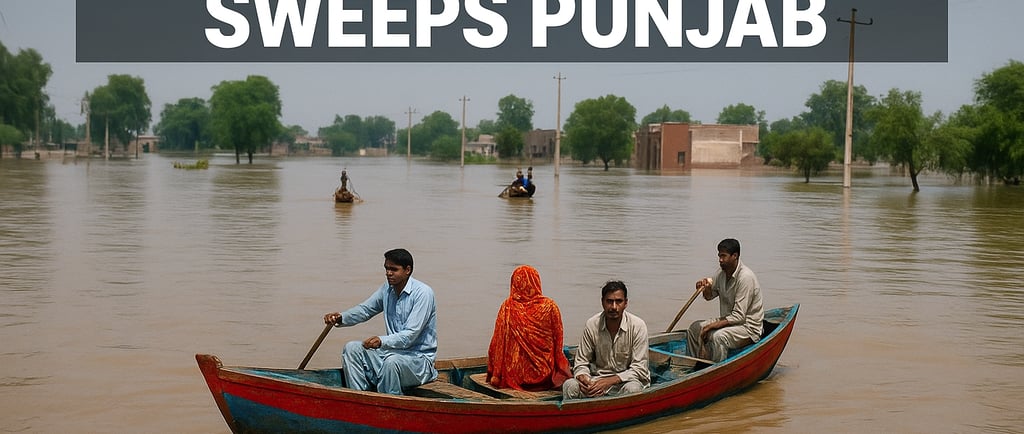
Pakistan is once again in the grip of a natural calamity as historic floods have swept across Punjab, leaving millions of people vulnerable and displacing countless families. The relentless monsoon rains, combined with the release of water from upstream dams in India, have triggered the most devastating flooding in the province’s recorded history. According to official reports, more than two million people have been directly affected, with villages submerged, crops destroyed, and infrastructure severely damaged. Tragically, over 849 people have lost their lives since late June, while more than 1,100 remain injured. Entire communities are struggling for survival as schools, police stations, and government buildings have been converted into temporary shelters. Boats have become the only means of transport in several districts, where rescue operations are underway to evacuate stranded families. The scale of the disaster has overwhelmed local authorities, forcing the government to mobilize the army, navy, and civil defense teams for relief efforts. The Sutlej River, one of the worst-hit areas, has burst its banks after India’s water release, flooding villages across Kasur, Okara, Pakpattan, and Bahawalnagar. Fields once rich with standing crops now lie under muddy waters, raising fears of food shortages and economic losses in the weeks ahead. Farmers, who depend on seasonal harvests, face uncertain futures as their livelihoods have been washed away. Health experts also warn of potential disease outbreaks due to contaminated water and overcrowded relief camps. Dengue, malaria, and cholera pose looming threats to displaced families who are already grappling with limited access to clean drinking water and medical facilities. This catastrophe highlights the urgent need for climate resilience and cross-border cooperation in water management. Pakistan, ranked among the most climate-vulnerable countries, cannot withstand repeated blows from extreme weather events without long-term strategies. Investment in disaster preparedness, improved drainage systems, and regional coordination with neighboring countries are now more critical than ever. As Punjab battles this crisis, stories of resilience emerge. Local volunteers, aid workers, and ordinary citizens have joined hands to provide food, medicine, and shelter to those in need. Yet, the road to recovery will be long and painful. The floods have not only displaced families but have also left deep scars on the social and economic fabric of the province. The tragedy in Punjab is a stark reminder that climate change is not a distant threat—it is a present reality demanding immediate action. The nation stands at a crossroads: either strengthen disaster management and adapt to changing weather patterns or continue to pay the price in lives, livelihoods, and lost futures.
Buraq Blog
9/3/20251 min read
My post content
Explore
Stay updated with the latest entertainment and news.
Connect
Discover
info@buraqblog.com
+92 3358272791
© 2025. All rights reserved.