
Increasing Gold Rate in Pakistan – Causes, Impacts and Future Outlook
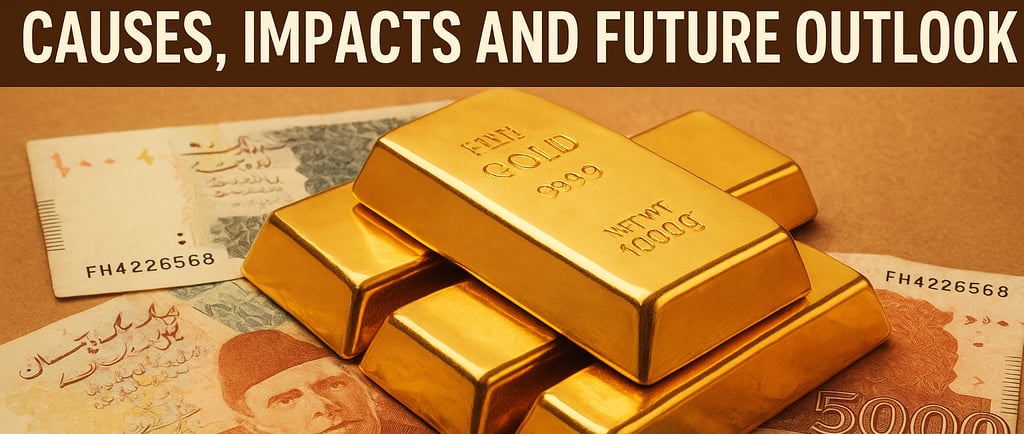
The gold rate in Pakistan has been witnessing a sharp and continuous increase, creating concern for consumers, jewellers, and investors alike. In recent weeks, the per tola price of gold has touched record highs, crossing Rs 376,000, while 10 grams of gold climbed above Rs 322,000. This surge is not happening in isolation; it is the result of multiple factors both inside and outside the country. The first and most influential factor is the rise in international gold prices, as global investors turn to gold as a safe-haven asset during uncertain economic conditions. With inflation, trade tensions, and global conflicts shaking confidence in stock markets, gold has become a preferred investment worldwide, and Pakistan, being a gold-importing nation, is directly affected. The second driver is the depreciation of the Pakistani rupee against the US dollar. As the rupee weakens, the cost of importing gold automatically rises, which pushes the local price higher even when international markets remain stable. This double impact of global price hikes and local currency weakness makes the situation more severe. Another contributing factor is government policy and trade restrictions. Recently, temporary suspensions on the import and export of gold and jewellery have further tightened supply, leading to higher premiums in the local market. Additionally, with major projects like the Reko Diq copper-gold mine still years away from production, Pakistan remains heavily dependent on imports, leaving prices vulnerable. The rising gold rate has several consequences. For ordinary citizens, especially those planning weddings, jewellery has become unaffordable. For investors, however, the gold market is seen as a hedge against inflation and currency instability, attracting more buyers despite high costs. Jewellers are also facing challenges, as fluctuating prices reduce overall sales volume while increasing operational risks. Looking ahead, the future of gold prices in Pakistan will depend on global market trends, the rupee’s performance, and government decisions regarding imports and local production. If international uncertainty continues and the rupee remains weak, prices are likely to climb further. However, long-term projects like Reko Diq could provide some stability by reducing dependence on imports. In conclusion, the increasing gold rate in Pakistan reflects the combined effect of international economic pressures and local vulnerabilities. While it offers opportunities for investors, it also creates difficulties for households and businesses. Monitoring global gold prices, currency exchange rates, and government policies will be key for anyone making decisions in this volatile market.
Buraq blog
9/13/20251 min read

My post content
Explore
Stay updated with the latest entertainment and news.
Connect
Discover
info@buraqblog.com
+92 3358272791
© 2025. All rights reserved.