

India Issues Flood Warning to Pakistan Amid Rising Sutlej River Threat
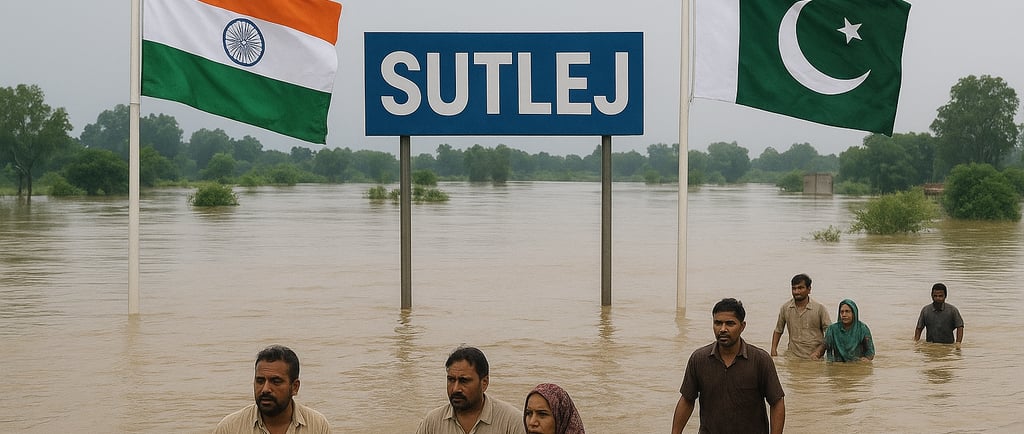
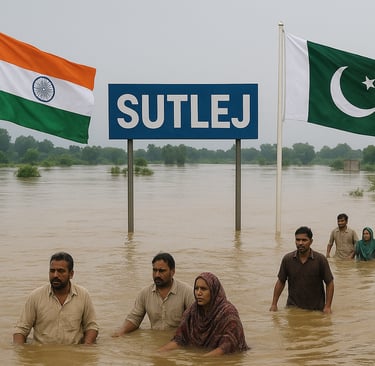
Pakistan is bracing for further disaster as India has issued a fresh warning of possible cross-border flooding due to heavy monsoon rains and the release of excess water from its upstream dams. The Sutlej River, which flows from India into Pakistan, has already swollen to dangerous levels, threatening to submerge vast stretches of agricultural land and rural communities across Punjab. This marks the second warning in recent weeks, highlighting the growing risk of flash floods and humanitarian crises on both sides of the border. Authorities in Punjab have begun mass evacuations in vulnerable districts including Kasur, Bahawalnagar, and Pakpattan, where floodwaters have already breached embankments. Rescue teams, supported by the Pakistan Army and Navy, are deploying boats to transport families trapped in rising waters. Schools, mosques, and government buildings have been turned into makeshift relief shelters as thousands leave behind their homes and belongings to escape the looming threat. The release of water from Indian dams is seen as a necessary step to manage monsoon surges, but its downstream impact on Pakistan has been catastrophic. Experts warn that if heavy rains persist, Pakistan could witness a repeat of past flood disasters, further straining its fragile economy and already overburdened relief operations. Farmers stand at the forefront of the crisis, with crops inundated just weeks before harvest, fueling fears of food shortages and inflation. Pakistan’s National Disaster Management Authority (NDMA) has urged citizens to remain vigilant, especially those living near riverbanks. Health officials are also preparing for potential outbreaks of waterborne diseases in crowded shelters, where clean drinking water and sanitation facilities are limited. This situation underscores the urgent need for cross-border water management and climate resilience strategies between Pakistan and India. With both nations facing unpredictable monsoon patterns intensified by climate change, cooperation is no longer a choice but a necessity. The lack of a robust, transparent water-sharing mechanism continues to fuel tensions while leaving millions of ordinary citizens vulnerable to devastation. As Punjab braces for the next wave of flooding, the warning from India serves as a stark reminder that regional unity in managing shared resources is essential for survival. Without long-term solutions, the people of both countries will remain at the mercy of nature’s fury, bearing the brunt of a crisis that transcends borders.
Buraq blog
9/3/20251 min read
My post content
Explore
Stay updated with the latest entertainment and news.
Connect
Discover
info@buraqblog.com
+92 3358272791
© 2025. All rights reserved.