

Punjab Floods 2025: Millions Affected as Monsoon Rains and Cross-Border Water Release Submerge Villages, Destroy Crops, and Trigger Emergency Response
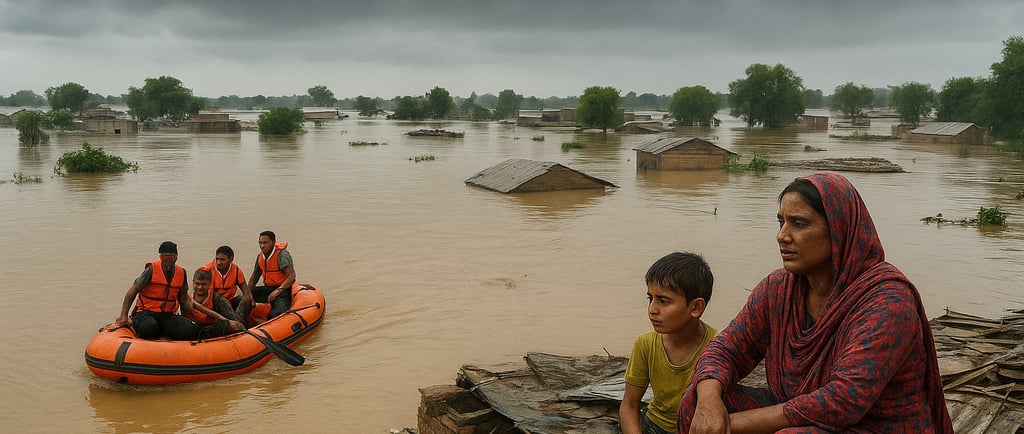
Punjab is currently facing one of the worst flood disasters in decades as record-breaking monsoon rains combined with heavy water discharges from Indian dams into the Sutlej, Ravi, and Chenab rivers have submerged thousands of villages, displaced over 1.5 million people, and left at least 30 confirmed dead. The situation has intensified rapidly, with reports suggesting that up to 2 million individuals remain at risk as floodwaters continue to rise. The floods have devastated Punjab’s agriculture, drowning standing crops of rice, maize, sugarcane, and cotton, a blow not only to local farmers but also to Pakistan’s broader economy that relies heavily on cotton for its textile industry. According to local officials, around 1,600 villages are completely under water, forcing mass evacuations; over one million people have already been moved to safer areas with the help of the Pakistan Army, NDMA, and local rescue agencies. Relief efforts are underway, with 727 relief camps, 265 medical centers, and 214 veterinary support facilities established, while mobile clinics and “clinics on wheels” are reaching affected families. Satellite technology from SUPARCO and thermal drones are being deployed to locate stranded residents and livestock. Chief Minister Maryam Nawaz and senior ministers are personally monitoring the crisis, ordering evacuation drives, shifting wheat reserves from flood-prone areas, and creating controlled breaches in embankments to divert water away from cities. NDMA has distributed food supplies to districts including Narowal, Hafizabad, and Sialkot, but shortages of clean water and medicine remain critical challenges. Farmers are reporting huge losses of livestock, homes, and equipment, and many residents refuse to leave rooftops for fear of losing their cattle and belongings. With farmlands destroyed and wheat stocks threatened, experts warn of food insecurity and inflation in the months ahead. Beyond immediate relief, Punjab now faces the long road to recovery: rebuilding homes, restoring infrastructure, and re-cultivating fields. The disaster highlights the urgent need for long-term investment in flood resilience, early warning systems, and cross-border water management. As Punjab reels from the impact of this disaster, the resilience of its people and the effectiveness of relief operations will determine how quickly life can return to normal in one of Pakistan’s most important provinces.
Buraq blog
9/1/20251 min read
My post content
Explore
Stay updated with the latest entertainment and news.
Connect
Discover
info@buraqblog.com
+92 3358272791
© 2025. All rights reserved.